Fire Risk Assessments in Construction
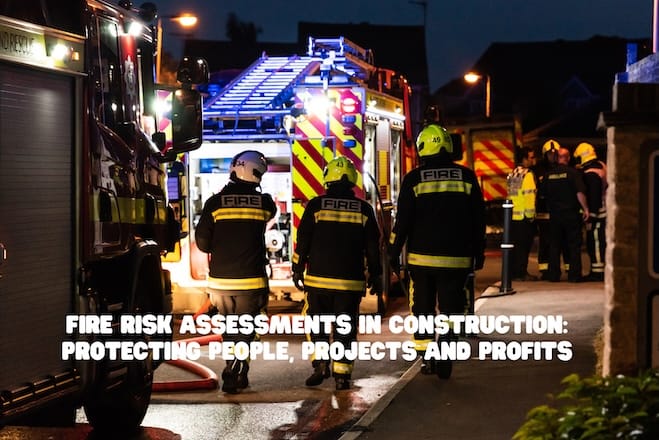
Fire Risk Assessments: Protecting People, Projects and Profits
Construction sites are inherently high-risk environments. Flammable materials, temporary structures, hot works and evolving layouts mean that fire can ignite and spread rapidly if risks are not properly controlled. The consequences can be devastating, placing workers, the public and the entire project at risk.
At Richardson-Hill Limited, we provide expert Fire Risk Assessments (FRAs) that help dutyholders meet their legal obligations while protecting lives, assets and project continuity. Our experience across complex construction and workplace environments ensures that fire risks are identified early, controlled effectively and reviewed throughout the life of a project.
What Is a Fire Risk Assessment?
A Fire Risk Assessment (FRA) is a legal requirement in the UK under the Regulatory Reform (Fire Safety) Order 2005. It applies to all workplaces and construction sites and is typically the responsibility of the principal contractor or responsible person.
An FRA is a structured process that involves:
- Identifying fire hazards such as ignition sources and combustible materials
- Assessing the level of risk to workers, visitors and the public
- Implementing proportionate fire control and prevention measures
- Recording findings and creating an effective fire safety plan
- Regularly reviewing and updating the assessment as site conditions change
Fire risk assessments on construction sites must also align with CDM Regulations 2015, HSE guidance and recognised best practice, including the
Joint Code of Practice on the Protection from Fire of Construction Sites and Buildings Undergoing Renovation (JCoP).
A Practical and Proportionate Approach
In many cases, undertaking a fire risk assessment is relatively straightforward, when it is planned, managed and monitored properly. The key is understanding how fire risks evolve during different phases of construction and ensuring fire precautions keep pace with the work.
Richardson-Hill Limited adopts a practical, site-specific approach, recognising that no two projects are the same. Our assessments focus not just on compliance, but on what will genuinely work on site.
The Five-Step Fire Risk Assessment Process
Our Fire Risk Assessments follow the recognised five-step methodology:
1. Identify Fire Hazards
We identify potential sources of ignition (such as welding, cutting, temporary electrics and smoking), along with combustible materials including timber, packaging, flammable liquids and gases.
2. Identify People at Risk
This includes site workers, contractors, visitors and members of the public who may be affected by a fire, particularly where sites interface with occupied buildings or public areas.
3. Evaluate the Risks and Take Action
We assess whether existing controls are adequate and recommend improvements where needed. This may include safe storage of flammable materials, hot-works controls, temporary fire protection and alignment with the JCoP.
4. Record Findings and Plan for Emergencies
We ensure findings are clearly recorded and supported by a robust fire safety and emergency plan. This includes fire detection and alarm arrangements, escape routes, fire-fighting equipment and workforce training so everyone understands what to do in the event of a fire.
5. Review and Update
Construction sites change constantly. We emphasise the importance of regular reviews, particularly when work phases change, layouts are altered or new risks are introduced.
The Consequences of Failing to Undertake a Fire Risk Assessment
The risks of failing to implement a suitable and sufficient FRA are not theoretical, they are real, costly and potentially fatal.
In the summer of 2025, an Altrincham-based construction company was fined £165,000 after repeatedly failing to put appropriate fire precautions in place during the redevelopment of a former warehouse in Preston. The project involved converting the building into 35 apartments across six floors.
When HSE inspectors attended the site, they found serious fire safety failings, including:
- No fire detection system
- No means of raising the alarm
- Inadequate escape arrangements
- Failure to maintain fire compartmentation as construction progressed
As a result, the HSE served both prohibition and improvement notices, halting work until adequate fire precautions were implemented. Despite this, construction continued in breach of the notices. The company was later convicted of multiple offences under the
Health and Safety at Work etc. Act 1974 and CDM Regulations 2015, and has since gone into liquidation.
This case highlights how inadequate fire planning can lead not only to enforcement action and fines, but also to project delays, reputational damage and business failure.
Expert Guidance You Can Rely On
The HSE is clear that, where necessary, suitable and sufficient fire-fighting equipment, fire detection and alarm systems must be provided and located appropriately on construction sites. Fire safety must be actively planned, managed and monitored throughout the project lifecycle.
At Richardson-Hill Limited, we support clients by delivering competent, compliant and proportionate Fire Risk Assessments that stand up to regulatory scrutiny and work in real-world conditions.
Why Choose Richardson-Hill Limited?
- Proven expertise in construction and workplace fire safety
- Strong understanding of CDM 2015 and HSE expectations
- Practical, risk-based assessments tailored to your project
- Clear, actionable recommendations, not generic reports
- Ongoing support as site conditions change
Fire safety is not a box-ticking exercise. It is a critical part of protecting people, projects and businesses.
If you need a professional Fire Risk Assessment you can rely on, Richardson-Hill Limited has the expertise. Contact us now for help, or click to call us now tel: 020 8524 8396 and visit our Fire Safety Services page